How to Use Shipping Container Stacking Locks Effectively?
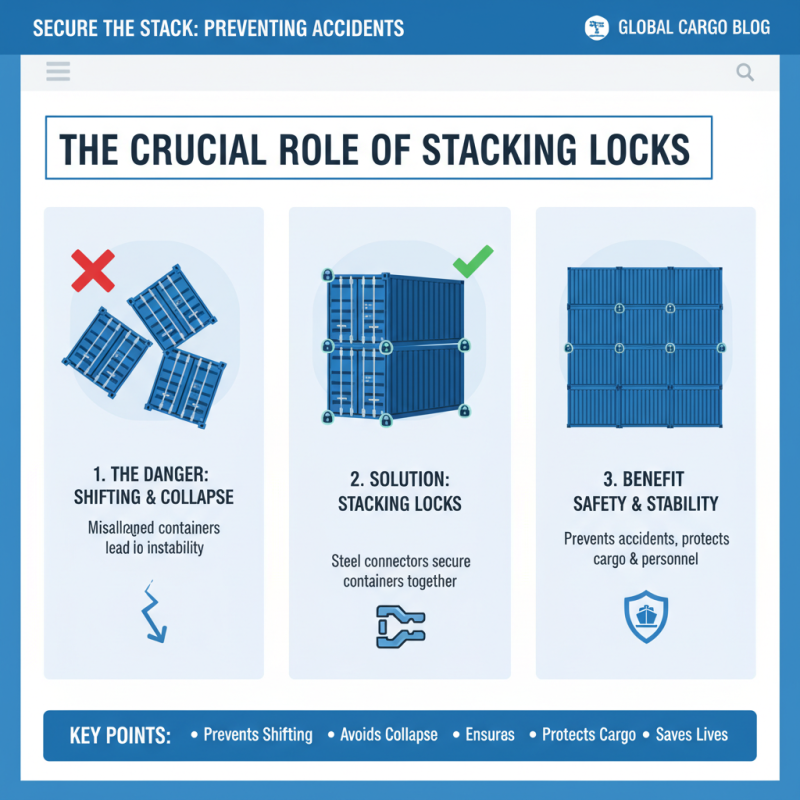
When managing shipping containers, safety and stability are paramount. Effective use of Shipping Container Stacking Locks can enhance both. Stacking locks help secure containers during transport and storage. They prevent shifting or falling, ensuring that your goods are protected.
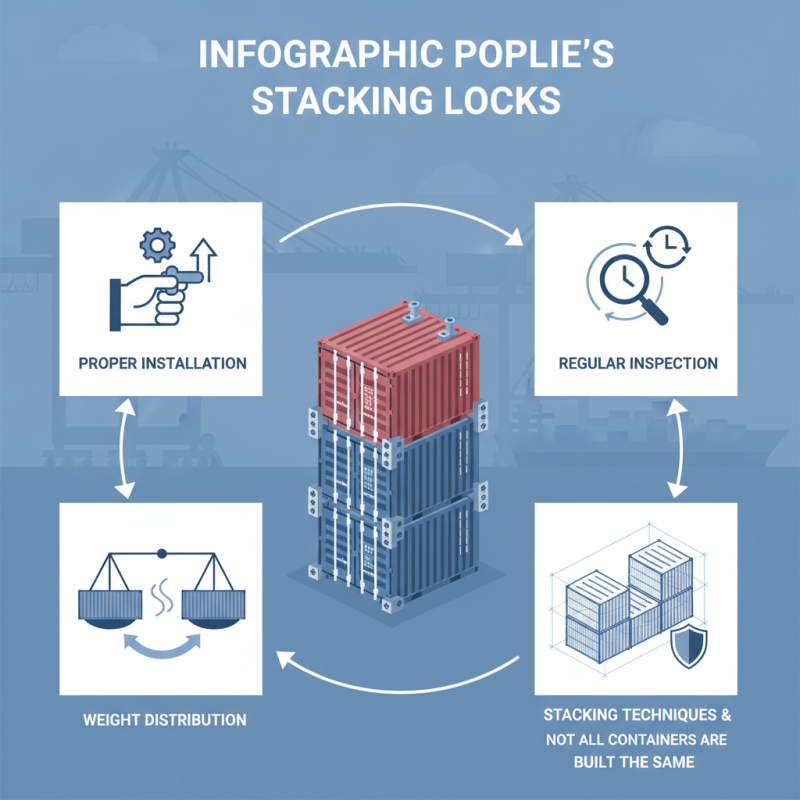
Many overlook the importance of proper installation. A loose stacking lock can lead to disastrous consequences. Regular inspection is crucial; a small oversight can result in bigger issues. Familiarizing yourself with the locking mechanisms can make a significant difference in safety and efficiency.
Additionally, it’s vital to consider the weight distribution of stacked containers. Inadequate distribution can stress locks and lead to failure. Not all containers are built the same; some may need extra care. While locks improve security, they are not a substitute for proper stacking techniques. Reflecting on these factors can prevent costly mistakes in container management.
Understanding the Purpose of Shipping Container Stacking Locks
Shipping container stacking locks serve a crucial purpose in securing containers during storage and transit. These locks prevent containers from shifting or collapsing, which can lead to serious accidents. When stacking containers, ensuring stability is vital. A single misaligned container can cause a domino effect, compromising the entire stack. Proper use of stacking locks mitigates this risk.
To effectively utilize stacking locks, it is essential to inspect them regularly. Locks that show signs of wear or damage should be replaced immediately. Even minor defects can lead to failure under pressure. It's important to remember that not all locks are created equal. Different types may offer varying levels of security and stability. Always choose locks that suit the specific requirements of your container setup.
In real-world applications, human error can occur. Sometimes, locks may not be engaged correctly. This oversight can result in costly accidents. Training personnel on the correct use of stacking locks is key. It’s an ongoing process of learning and adjusting practices to ensure safety. Regular audits of stacking setups can reveal weaknesses in your system, prompting necessary adjustments. Taking these steps enhances safety and efficiency while using stacking locks.
Choosing the Right Type of Stacking Locks for Your Containers
When choosing the right type of stacking locks for shipping containers, it’s crucial to consider the structure and environment. Stacking locks can vary in design and utility. Options include bolt locks, cam locks, and twist locks. Each presents unique benefits and drawbacks. For example, cam locks are great for quick access but may not withstand extreme environmental conditions.
According to industry reports, around 30% of shipping container thefts occur due to inadequate locking mechanisms. This statistic highlights the need for robust security solutions. A study from FreightWatch International indicates that improper locking methods increase vulnerability. Thus, investing in high-quality stacking locks is essential.
Remember that not all environments are the same. For settings subject to high winds or seismic activity, consider locks that provide added stability. Reflect on the fact that even the best locks may fail if not installed correctly. Regular inspections and maintenance can help ensure long-term efficacy. The right choice is not just about the lock but also about understanding your specific context.
Shipping Container Stacking Locks Usage Statistics
Step-by-Step Guide to Properly Install Stacking Locks
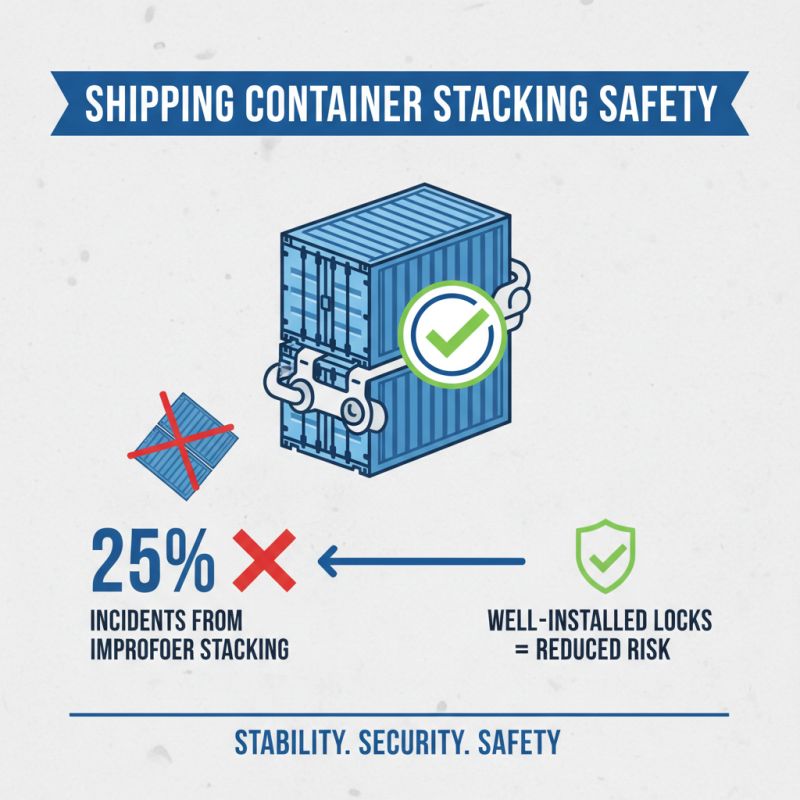
Installing shipping container stacking locks is crucial for safety and stability. These locks prevent containers from shifting during transport or stacking. Research shows that over 25% of container incidents result from improper stacking. A well-installed lock can reduce this risk significantly.
To begin installation, gather necessary tools: a drill, bolts, and the locks themselves. Start by marking where the locks will be placed. Ideally, these should be positioned at the corners of the containers. Ensure the surface is clean and debris-free.
Drilling holes can be tricky. Misaligned holes may weaken the structure. Make sure your measurements are precise. Use a level to check alignment. Once aligned, secure the locks tightly. It's essential to check them regularly, as wear can occur over time. Consider that even minor issues can lead to larger problems. Monitoring these locks should be part of routine maintenance, ensuring they hold up under pressure.
Best Practices for Maintaining and Inspecting Stacking Locks
Shipping container stacking locks play a crucial role in ensuring the stability and security of stacked containers. Regular maintenance and inspection of these locks are vital for preventing accidents. Reports indicate that improper locking may lead to a 30% increase in cargo damage incidents. Therefore, understanding best practices is essential.
Inspect stacking locks regularly for wear and tear. Look for rust, corrosion, or other signs of damage. A slight issue can lead to significant problems later. Ensure that all components are functioning correctly. If a lock is faulty, it’s better to replace it than to risk an entire load.
Tip: Consider implementing a
monthly inspection schedule. This will help catch issues early. Also, train your team to recognize problems during regular checks.
Educating your staff can reduce incidents.
Ensure locks are properly lubricated. Correct lubrication reduces friction and wear. A simple check once a month can prolong the life of the locks. However,
don’t over-lubricate, as it can attract dirt and debris.
Keeping the locks clean is as crucial as lubrication.
Common Safety Precautions When Using Stacking Locks on Containers
When using shipping container stacking locks, safety is paramount. Proper installation and regular maintenance can prevent accidents. Always inspect locks before use. Look for signs of rust or wear. These issues can compromise strength. If you spot anything unusual, replace the lock immediately.
Using the right tools is essential. Ensure you have the necessary equipment for installation. A wrench that fits properly will make the process smoother. Avoid using makeshift tools; they can lead to mistakes. Tightening locks too much or too little is a common mistake. Both can weaken the security of your containers.
Tips for effective use include keeping the area around containers clear. This can help prevent accidents. Train all personnel on the importance of proper lock usage. Communication is key. If someone notices a problem, they should report it right away. Safety should always come first when working with heavy equipment.
How to Use Shipping Container Stacking Locks Effectively? - Common Safety Precautions When Using Stacking Locks on Containers
| Precaution |
Description |
Importance Level |
| Inspect Locks Regularly |
Check for any signs of wear or damage before use. |
High |
| Follow Weight Guidelines |
Adhere to the manufacturer's weight limits for stacked containers. |
Critical |
| Securely Fasten Each Lock |
Ensure each lock is properly engaged before stacking. |
High |
| Use Appropriate Equipment |
Utilize the right tools for installation and removal of locks. |
Medium |
| Maintain a Safe Distance |
Keep a safe distance while containers are being moved or stacked. |
High |
| Train Operators |
Ensure all personnel are trained in proper stacking lock usage. |
Critical |