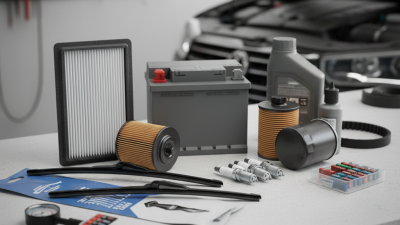
How to Source Genuine Parts Globally in 2026? The question now reaches beyond price, availability, and delivery speed. Buyers must verify origin, manufacturer authorization, technical compatibility, and supply-chain evidence. A visually perfect component can still be the wrong part. That mistake may stop a production line, damage equipment, or weaken customer trust.
Henry Ford, a manufacturing pioneer, said, “Quality means doing it right when no one is looking.” His words remain relevant to Genuine Parts sourcing. In 2026, responsible procurement teams will examine supplier records, batch numbers, serial labels, certificates, and warranty terms. They will also compare regional pricing without ignoring transport risks, customs requirements, and storage conditions. Real experience matters here. A supplier with responsive engineers can solve fitment problems faster than a cheaper seller with incomplete documentation.
Technology will help. Digital catalogs, automated verification, and shipment tracking can expose inconsistencies earlier. Still, systems are not perfect. Data can be outdated. Product images can mislead. Human review remains necessary, especially for safety-critical components and older equipment. Buyers should question unusually low prices, unclear factory addresses, and pressure to pay through untraceable channels. These warning signs deserve attention.
The strongest global strategy combines approved distributors, manufacturer confirmation, independent inspection, and clear records. It also measures performance after delivery, not only during purchase. A returned part, delayed shipment, or failed installation should become useful evidence. That reflection may feel uncomfortable, but it improves the next decision. Genuine Parts are not simply products in a box. They are verified components supported by accountability, technical accuracy, and dependable service.

Genuine parts are components produced or approved for a specific machine, vehicle, or system. They must match the required design, materials, tolerances, and performance data. Appearance alone proves very little.
A genuine part should have traceable identifiers, consistent packaging, and reliable production records.
In practical procurement work, I check the part number against technical drawings and maintenance records. I also compare batch details, certificates, and supplier documentation. Small mismatches can create expensive failures later.
Global sourcing requires more than finding a low quotation. Buyers should define the destination country, applicable safety standards, customs documents, delivery terms, and warranty expectations. Supplier audits can reveal weak storage conditions or unclear subcontracting.
Independent inspection is useful, especially when purchasing critical parts remotely. Still, no checklist is flawless. A certificate may be valid but incomplete. That is why evidence should come from several sources, not one email attachment.
Keep approval records, inspection photos, and communication histories in one controlled file.
Tips:
Request samples before large orders. Confirm serial numbers through documented channels. Ask how the supplier controls obsolete inventory. Check moisture protection, labeling, and transport packaging. Compare lead times with actual production capacity. Avoid unusually cheap offers. They may hide substitution risks. Leave room for doubt. That habit protects quality.

Approved international suppliers should be verified before price negotiations begin. Request a current authorization letter, legal registration, factory address, and traceable warranty terms. Match the part number, revision code, packaging label, and serial record against the technical catalog. One missed character can identify a different component.
Distribution channels require equal scrutiny. Prefer manufacturer-authorized distributors, certified regional warehouses, and documented industrial marketplaces. Ask where ownership changes hands and who inspected the part. A clean invoice is useful, but insufficient. Require batch photographs, inspection reports, and shipment records before release. Small checks matter. In practice, urgent purchases often weaken these controls.
Global logistics adds another risk layer. UNCTAD’s Review of Maritime Transport 2024 reports that over 80% of world merchandise trade by volume moves by sea. Port delays and handling transfers can expose parts to damage, substitution, or poor storage. Select channels with sealed packaging, humidity controls, and chain-of-custody timestamps. The OECD Trade Facilitation Indicators show that stronger border procedures support faster clearance and lower trade costs. However, a report cannot validate one supplier. Site audits, sample testing, and independent documentation remain necessary. I would also record rejected quotations and unexplained discounts, not just successful orders. That uncomfortable evidence may reveal weaknesses in the approved network.
How to Source Genuine Parts Globally in 2026?
Sourcing genuine parts requires more than a clean product photo. I have seen matching labels hide inconsistent materials and incomplete traceability. Ask suppliers for part numbers, production dates, batch records, and clear photographs of packaging. Compare these details with the original technical documentation. Small differences can matter. Check serial numbers before payment, not after delivery.
Tips: Request a certificate of conformity and recent inspection reports. Confirm the issuing laboratory and verify its accreditation independently. Review the supplier’s registration, operating history, export experience, and quality procedures. A reliable supplier should explain sourcing routes without hesitation. Use independent inspectors for expensive or safety-critical components. They can check dimensions, markings, materials, and packaging at the warehouse. Keep inspection images and documents in one secure file.
Quality standards must match the part’s intended use and destination market. Ask whether production follows a recognized quality system, such as ISO 9001, and request evidence. Do not accept generic certificates with missing dates or inconsistent company names. I once trusted a familiar-looking document too quickly. That mistake taught me to verify every reference directly. Suppliers can make honest errors, but weak records deserve closer review. Build trust slowly. Keep questioning.
Practical verification framework for international procurement, quality control, and supplier due diligence
| Verification Dimension | What to Verify | Acceptable Evidence | Pass Criteria | Typical Risk Signal | Recommended Control |
|---|---|---|---|---|---|
| Part Identity | Exact part number, revision, package type, electrical or mechanical specifications, and approved substitute status | Current technical datasheet, drawing, purchase specification, and approved-part list | All identifiers and specifications match the purchase order and engineering documentation | Part number is incomplete, altered, obsolete, or different across documents | Require engineering approval before accepting substitutes or revised parts |
| Manufacturer Traceability | Lot code, date code, serial number, country of origin, and chain of custody | Original packaging photographs, shipping records, lot-level documents, and traceability log | Identifiers are legible, consistent, and traceable to the supplier's purchase source | Relabeled packaging, missing date codes, mixed lots, or unexplained gaps in ownership | Use lot-level receiving records and retain traceability for the product life cycle |
| Authenticity Testing | Physical markings, dimensions, construction, electrical performance, material composition, and functional behavior | Incoming inspection report, calibrated measurement results, visual inspection, and independent laboratory report when required | Results meet the approved specification and sampling plan; destructive testing is controlled | Supplier refuses samples, test access, or independent verification | Apply risk-based inspection; use independent testing for high-value or safety-critical parts |
| Packaging and Handling | Seals, moisture protection, electrostatic discharge protection, humidity indicators, shelf-life labels, and physical damage | Receiving photographs, packaging specifications, storage records, and nonconformance reports | Packaging is intact, suitable for the part type, and compliant with handling requirements | Opened or resealed bags, corrosion, moisture exposure, damaged labels, or uncontrolled storage | Quarantine questionable shipments and inspect before releasing them to production |
| Quality Management System | Whether the supplier operates a documented quality system appropriate to the product and industry | Valid certificate, certification scope, certificate number, expiration date, and certification-body verification | Certificate is valid and its scope covers the supplied product or relevant service | Expired certificate, unrelated scope, unverifiable certificate, or certificate issued only for an office address | Verify certificates directly with the certification body and repeat checks periodically |
| Relevant Quality Standards | Applicable management or sector standard, such as ISO 9001:2015, IATF 16949:2016, AS9100D, or ISO 13485:2016 | Certificate, audit scope, last audit status, corrective-action records, and quality manual excerpts | The standard matches the industry risk and the supplier demonstrates effective corrective action | Supplier presents a generic certificate as proof that every part is genuine | Treat certification as process evidence, not as standalone proof of part authenticity |
| Supplier Authorization | Whether the supplier is an authorized channel, approved reseller, independent distributor, broker, or aftermarket source | Written authorization, channel confirmation, purchasing records, and verifiable business registration | Commercial status is clearly disclosed and independently confirmed where possible | Supplier refuses to disclose sourcing route or provides unverifiable authorization claims | Use enhanced testing and contractual controls for independent or brokered supply |
| Certificate of Conformity | Conformity statement, purchase order reference, part number, quantity, lot number, and authorized signatory | Signed certificate of conformity linked to the exact shipment and applicable specification | Document is complete, consistent with shipment records, and issued by a responsible legal entity | Blanket certificate, generic wording, missing lot information, or inconsistent quantities | Make lot-specific conformity documents a contractual requirement |
| Regulatory Compliance | Material and product obligations applicable to destination markets, including RoHS Directive 2011/65/EU and REACH Regulation (EC) No 1907/2006 where relevant | Declaration of conformity, material declaration, laboratory test report, and substance disclosure | Evidence covers the exact product, revision, and destination-market requirements | Document references a different part, old revision, or unspecified legal scope | Obtain updated declarations when the part, material, or regulatory requirement changes |
| Calibration and Test Capability | Calibration status, measurement uncertainty, test method, equipment suitability, and laboratory competence | Calibration certificates, test procedures, equipment list, and reports with test conditions | Equipment is calibrated and test methods are suitable for the required acceptance criteria | Untraceable calibration, missing test conditions, or results without sample identification | Specify calibration traceability and minimum report content in the purchase agreement |
| Supply Chain Security | Sub-suppliers, storage locations, logistics providers, export controls, and unauthorized channel exposure | Supplier questionnaire, process map, sub-supplier disclosure, logistics records, and site-audit findings | Critical custody points are identified and controlled from purchase through delivery | Unexplained routing, frequent changes of warehouse, or undisclosed subcontracting | Require prior approval for changes to source, location, process, or logistics provider |
| Commercial and Legal Due Diligence | Legal entity, operating address, tax information, sanctions screening, payment details, insurance, and dispute history | Business registration, bank verification, compliance screening, insurance certificate, and signed contract | Supplier identity and payment beneficiary are consistent and legally verifiable | Last-minute bank changes, mismatched legal names, pressure for unprotected payment, or unverifiable address | Use segregation of duties, approved payment controls, and documented compliance review |
| Contractual Protection | Authenticity warranty, inspection rights, return terms, recall responsibility, nonconformance remedies, and record retention | Signed supply agreement, quality agreement, inspection clause, and warranty terms | Responsibilities are measurable, enforceable, and linked to shipment and lot records | Supplier rejects inspection, returns, or liability provisions before quotation | Do not release high-risk orders without signed quality and commercial terms |
| Risk-Based Approval | Criticality, counterfeit exposure, value, scarcity, regulatory impact, and consequences of failure | Supplier risk score, part criticality assessment, inspection plan, and approval record | Verification intensity is proportional to product and supply-chain risk | Same inspection level used for low-risk consumables and safety-critical components | Define low, medium, and high-risk pathways with separate approval and testing requirements |
Global parts sourcing begins with a landed-cost calculation, not a supplier quote. Compare unit price, inspection fees, packaging, freight, insurance, duties, taxes, and broker charges. A low price can become expensive after clearance. Ask for a formal quotation with currency, validity period, minimum order, and payment terms. Keep evidence. Request serial references, production details, and clear photos before payment. Independent inspection can verify dimensions, markings, and condition. Genuine does not mean perfect. Some parts carry cosmetic wear from storage.
Shipping decisions affect cash flow and damage risk. Match transport speed to the equipment’s downtime cost. Small urgent components may suit air freight, while heavy cartons often favor sea or consolidated road services. Confirm carton dimensions, gross weight, pallet rules, and delivery terms in writing. Track handover points. I once treated freight as a fixed cost; it changed after repacking. That mistake taught me to price two scenarios. Build a buffer for delays. Stay realistic.
Customs and import compliance require disciplined records. Confirm tariff classification, country of origin, commercial invoice, packing list, and required permits with a qualified customs professional. Rules vary by destination and product type. Do not accept vague descriptions such as “machine items.” Use accurate technical names and declared values. Check whether local taxes are payable before release. Keep supplier, inspection, shipping, and customs documents together. Missing paperwork can stop a shipment longer than bad weather. Review each shipment. The process will not be flawless.
Evaluate shipping reliability and customs readiness before comparing the total landed cost.
The chart compares the 2023 World Bank Logistics Performance Index scores, ranging from 1 to 5. Higher scores indicate stronger performance across customs, infrastructure, international shipments, logistics competence, tracking, and timeliness. Use this benchmark together with the supplier price, freight quote, HS classification, applicable duty, VAT or GST, country-of-origin documents, permits, and inspection requirements to calculate the genuine landed cost in 2026. Import charges remain product- and destination-specific.
Source: World Bank, Logistics Performance Index 2023. https://lpi.worldbank.org/
Managing a global parts order requires more than comparing prices. I use a written specification with part numbers, approved materials, dimensions, revision codes, and packaging requirements. Every order should show quantity, delivery terms, inspection points, and responsibility for damaged goods. Details matter.
Documentation must follow the part from quotation to warehouse receipt. Request commercial invoices, packing lists, certificates of conformity, test reports, and traceable serial numbers. Keep digital copies in one controlled folder. A missing revision code can create expensive confusion months later.
Inspection should happen before shipment, not after installation. An independent inspector can compare samples, measure critical dimensions, photograph markings, and record carton conditions. Ask for timestamped images and a signed inspection report. I once overlooked a small label mismatch because the dimensions were correct. That was a useful warning. Visual checks need context.
After-sales support should be agreed in writing. Define response times, replacement procedures, technical contacts, and evidence required for a claim. Keep spare units for critical equipment where downtime is costly. A supplier may answer quickly during sales but slowly after delivery. Test that support before placing a large order. Even careful sourcing has weak points, so review failed orders and update the checklist regularly.