Leave Your Message

What Are the Top Heavy Duty Floor Crane Types in 2026?

A Heavy Duty Floor Crane can turn a difficult lift into a controlled, repeatable task, but the right design depends on the work around it. A compact folding hydraulic crane may suit a repair bay with limited storage. A powered model can reduce manual effort when loads move frequently across a workshop floor. Counterbalanced and adjustable-boom designs offer different combinations of reach, clearance, and lifting capacity. No single type fits every job.

In 2026, comparing cranes means looking beyond the headline capacity. Check the rated load at the boom position you will actually use; capacity often changes as the boom extends. Measure doorways, aisle widths, and the space needed to position the legs beneath a load. Consider lift height, wheel type, floor condition, power source, and how the crane will be stored. Small details matter. A wheel that rolls smoothly on concrete may behave poorly over joints or uneven surfaces.

This guide introduces the main heavy-duty floor crane types and explains where each may be useful. It also highlights practical trade-offs, including portability, operating effort, and workspace demands. Specifications should always be verified against the manufacturer’s documentation and the intended lifting conditions. A capacity figure alone is not a complete selection method. Sometimes the less convenient-looking crane is the safer, better-matched choice—and that deserves a second look.
What Are the Top Heavy Duty Floor Crane Types in 2026?

What Defines a Heavy-Duty Floor Crane in 2026?

A heavy-duty floor crane in 2026 is defined by more than a large capacity label. It is built to lift substantial loads repeatedly while maintaining controlled movement and stability. Its frame, boom, hydraulic system, wheels, and brakes must work together under real workshop conditions. A crane that handles one impressive lift may not suit a full shift of frequent use.

Numbers alone mislead. Check the rated capacity at the actual boom extension and load position, not just the maximum figure. As the boom reaches farther, the safe lifting capacity often decreases. The crane should also fit the space: measure doorways, turning areas, floor slopes, and the clearance beneath the load. These details can decide whether a unit is practical or frustrating.

Look for durable construction, predictable controls, secure load-holding features, and clear operating information. Some newer models may offer powered travel or electronic load indicators, but useful features do not replace sound design or proper training. That matters. Inspect the crane’s wheels, welds, hoses, and warning devices before demanding work; wear can change performance. I would not call a crane heavy-duty based on appearance alone. A careful match between load, reach, duty cycle, and floor conditions is the more dependable test.

How Floor Cranes Differ by Power Source and Mobility

Heavy-duty floor cranes differ most in how they lift and travel. Manual hydraulic models use a hand pump, so they suit occasional lifts where power access is limited. No motor needed. The trade-off is slower lifting and more operator effort, especially with repeated loads. Electric-hydraulic cranes raise loads with less pumping, which helps during frequent handling. Battery-powered units can also move without a trailing cable, but their runtime and charging schedule matter.

Mobility varies just as much. A push-operated crane is simple to position on smooth, level floors, though moving a heavy load still takes effort. Powered travel reduces pushing, but needs careful speed control in tight aisles. Compact models fit through narrow doorways; their shorter reach may limit access beneath machinery. Counterbalanced designs can approach loads without front legs, but capacity can change sharply as the boom extends.

Match the crane to the actual route and lift, not just the maximum capacity printed on its rating plate. Check floor condition, doorway width, turning space, load weight, and boom reach. A crane rated for a heavy load may have a much lower allowable capacity at full extension. That detail is easy to miss. I would also test the intended maneuver with an unloaded unit; real workspaces often reveal awkward turns that a specification sheet cannot.

The Main Types: Hydraulic, Electric, and Counterbalanced Floor Cranes

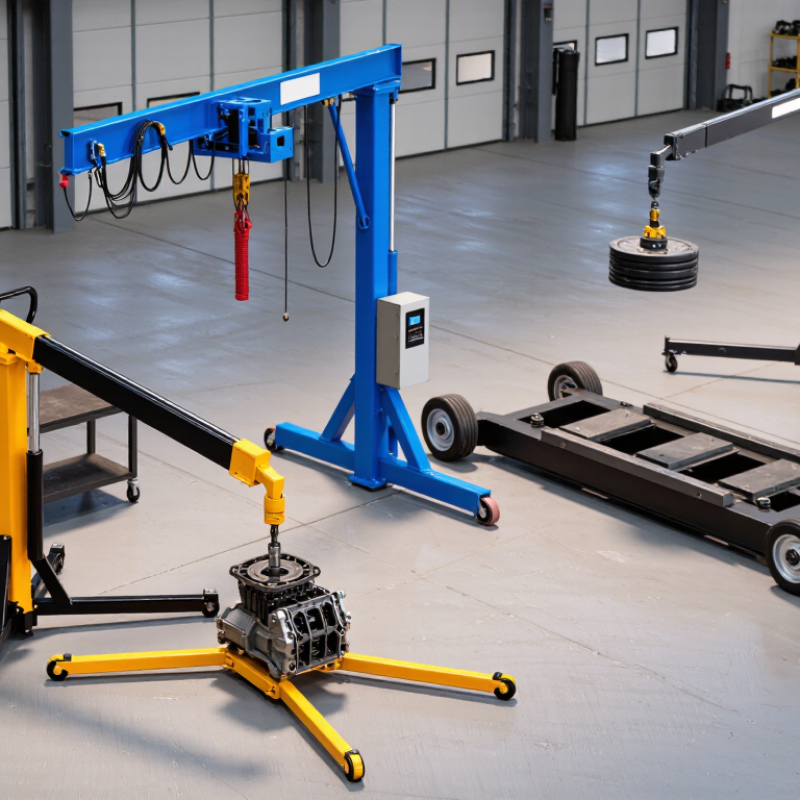
In 2026, heavy-duty floor cranes generally fall into three useful categories: hydraulic, electric, and counterbalanced.

Hydraulic

models use a hand pump or powered hydraulic system to raise loads, making them a practical choice for occasional lifts in tight workshops. Their compact frames can fit around machinery, while swivel casters help position them on smooth floors. Check the rated capacity at the boom’s actual extension, not just its shortest setting. Reach changes lifting capacity. Manual pumping can also feel slow during repeated moves.

Electric

floor cranes reduce physical effort during lifting and lowering. They suit frequent handling tasks, such as moving a motor from a pallet to a repair bench. Battery runtime, charging access, and control response deserve attention before selecting a model. Quiet operation is helpful indoors. Yet an electric crane still needs clear travel paths and a floor that can support its combined load.

Counterbalanced

floor cranes place weight opposite the boom, allowing the legs to stay clear of some loads. This can help when positioning a machine beside a workbench or approaching a pallet from the front. The counterweight adds mass, so turning space and floor capacity matter. Measure the load’s center of gravity and compare it with the crane’s capacity chart. It is easy to overlook that detail. A site trial may reveal awkward reach or steering issues that a specification sheet cannot.

Where Each Heavy-Duty Floor Crane Type Works Best

Hydraulic shop cranes suit repair bays where technicians lift engines, pumps, or compact machine assemblies. Their wheeled bases can move between workstations, while adjustable booms help reach over equipment. They work best on smooth, level floors with clear turning space. Check the rated capacity at the boom position you plan to use; maximum capacity often applies only at the shortest reach. Space is tight.

Counterbalanced floor cranes are useful when legs cannot slide beneath a load, such as beside a machine bed or pallet. Their offset design provides access from the front, but the counterweight needs room to turn. Straddle cranes, by contrast, bridge a load and travel around it, making them practical for long parts or bulky items with accessible lifting points. Measure doorways and aisle widths before choosing either type. A few centimeters can change the fit.

Portable gantry cranes work well for repeated lifts across a defined area, including assembly stations and maintenance zones. Their height and span can accommodate awkward loads, though setup and floor condition matter. On uneven or damaged concrete, movement may become difficult and less predictable. For any type, confirm load weight, lifting-point strength, and floor capacity before the lift. In practice, the crane that fits the space is not always the one that best fits the job.

How to Compare Load Capacity, Stability, and Safety Features

What Are the Top Heavy Duty Floor Crane Types in 2026?
How to Compare Load Capacity, Stability, and Safety Features

Counterbalanced floor cranes suit heavy loads in tight workshop aisles. Telescopic-boom models offer greater reach, while folding-boom designs can maneuver around machinery. Compare rated capacity at the actual boom extension, not just the headline maximum. A crane rated for a heavy load close in may lift much less with its boom extended. Check the load chart before every lift.

Stability depends on more than crane type. Consider wheelbase, counterweights, outrigger setup, floor condition, and the load’s center of gravity. A small slope or a raised wheel can change how securely the crane stands. Choose safety features that match the task, such as overload protection, clear capacity markings, and controlled lowering. They help, but they do not replace a level floor or trained operators.

The U.S. Bureau of Labor Statistics reported 5,283 fatal work injuries across all industries in its 2023 Census of Fatal Occupational Injuries; this figure is not crane-specific. It is a sobering reminder to treat lift planning as real risk control. One awkward detail: capacity charts are easy to overlook when a lift feels routine. Measure the load, confirm the reach, and inspect wheels and hydraulics before moving it.

What Are the Top Heavy Duty Floor Crane Types in 2026? — How to Compare Load Capacity, Stability, and Safety Features
Crane type Indicative capacity range Stability and floor considerations Common safety features Best suited to Key comparison point
Hydraulic shop crane (engine hoist) Common configurations are approximately 0.5–2 metric tonnes. Rated capacity often decreases as the boom is extended; consult the crane’s load chart. Stability depends on the outrigger-leg position, boom reach, load position, and a firm, level floor. The legs must be positioned as specified by the manufacturer. Typical features include a hydraulic control valve, load hook with latch, locking casters, and a rated-capacity marking. Overload protection and other features vary by model. Repair shops and maintenance areas where loads need to be lifted and moved short distances. Compare capacity at the required boom extension—not only the crane’s maximum stated rating.
Mobile gantry crane Portable and industrial models span a broad range; configurations of roughly 0.5–5 metric tonnes are commonly available. Capacity depends on the frame, span, height, and hoist. A wide frame can provide good resistance to tipping when assembled and used correctly. The floor must be level and strong enough for the wheel loads; movement with a suspended load is restricted or prohibited on many models. Common provisions include rated-capacity labels, end stops, locking or braked wheels, and secure trolley or hoist travel limits. Exact provisions depend on design. Workshops and production areas that need a movable lifting point without a permanent overhead runway. Check the rated capacity at the selected span and height, along with allowable floor loading and rules for moving the crane.
Counterbalanced mobile floor crane Capacity varies widely; many compact industrial units are designed for loads in the several-hundred-kilogram range, while heavier designs may be rated higher. Use the specific load chart. A counterweight helps balance the load, but safe capacity is affected by load reach, load centre, mast position, and floor slope. The counterweight increases overall machine mass. Depending on the design, features may include a load chart, travel or lift controls, braking, and an emergency stop on powered units. Check which safeguards are fitted. Handling dies, machine components, and other loads where a crane must approach equipment or workbenches. Compare capacity at the actual load centre and reach, and verify floor capacity for the machine’s wheel loads.
Powered mobile floor crane Available capacities range from light industrial ratings to several tonnes, depending on the design. The rated capacity may change with boom position or load reach. Powered travel and lifting reduce operator effort but do not remove tipping or floor-loading risks. Turning radius, travel path, gradients, and load position affect stability. Possible features include an emergency stop, braking, warning signals, interlocks, and overload or travel-limit controls. Confirm the fitted features in the product documentation. Repeated lifting and transport tasks in larger workshops or production areas. Assess the full operating envelope, including turning space, travel limits, battery or power requirements, and the load chart.
Comparison note: Capacity ranges are indicative examples, not universal ratings or a ranking. Actual safe working capacity depends on the exact crane configuration, load position, accessories, floor conditions, and manufacturer’s instructions. Never exceed the marked rating or use a crane on an unsuitable floor.